LIBERIA
This website explores historical background, key statistics, political development, and the pressing issues shaping Liberia today.
History & Origins
Early History (Pre-1821)
* Indigenous groups migrated to the region between the 12th–16th centuries.
* Portuguese explorers named it the "Pepper Coast" due to abundant melegueta pepper.
* Brief trading posts were established by Dutch (1602) and English (1663) but didn’t last.Colonization and Settlement (1821–1847)
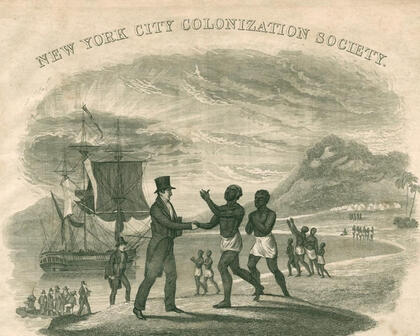
* American Colonization Society (ACS) founded in 1816 to relocate free Black Americans to Africa.
* First ACS ship (Elizabeth) arrived in 1820; settlements were established starting in 1821.
* Indigenous resistance, harsh climate, and disease led to high settler mortality (~60% death rate).
* Colonies like "Maryland-in-Africa" and others were formed along the coast.
* In 1838, these colonies unified as the Commonwealth of Liberia; Monrovia became the capital.
* 1847: Liberia declared independence, with Joseph Jenkins Roberts as first president.Americo-Liberian Rule (1847–1980)
* Rule dominated by Americo-Liberians, descendants of U.S. settlers (~5% of population).
* Indigenous Liberians disenfranchised
* True Whig Party held power almost exclusively after 1878.
* Economy based on agriculture and later rubber exports (Firestone entered in 1926).
* Rebellions and territorial disputes were rampant, but U.S. protected Liberia’s independence.
* U.S. influence was strong, especially under President Taft and during WWII.
* After WWII: Migration from interior to coast and increased U.S. aid ($280M from 1962–1980).
* Deep social and economic divides persisted between elites and native population.Cold War
* America pressured Liberia to resist Soviet influence during the Cold War.
* Then-president William Tubman happily complied, and recieved hundreds of millions of dollars in aid from the US.
* Things changed when he was succeeded by President William Tolbert, who attempted to re-align the country and make it a little more independent.
* He established relations with communist countries such as the Soviet Union, Cuba, and China. He also cut ties with Israel during the Yom Kippur War.Coup and Samuel Doe Era (1980–1989)
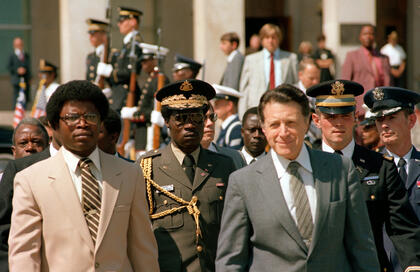
* 1980 coup: Master Sgt. Samuel Doe overthrew President Tolbert in a bloody coup, ending Americo-Liberian rule.
* Created the People’s Redemption Council (PRC); gained U.S. support under Reagan.
* Doe suppressed opposition and ethnically favored his Krahn group.
* Corruption, tribal violence, and economic decline fueled instability.First Liberian Civil War (1989–1997)
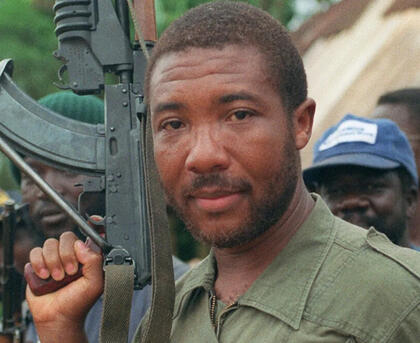
* 1989: Charles Taylor’s NPFL invaded Liberia from Ivory Coast.
* Ethnic war between Krahn (Doe) and Gio/Mano (Taylor) escalated.
* Doe was captured and executed by INPFL in 1990.
* ECOWAS established ECOMOG to stabilize the country.
* Multiple peace agreements failed; factions continued fighting.
* 1997: Charles Taylor elected president in post-war elections.Second Liberian Civil War (1999–2003)
* New rebel groups LURD and MODEL emerged, backed by Guinea and Ivory Coast.
* War crimes indictment issued for Taylor in 2003 by UN-backed tribunal.
* Women’s peace movement, led by Leymah Gbowee, played a key role in forcing peace talks.
* August 2003: Taylor resigned and went into exile; interim government formed.Post-War Transition and Democracy (2003–Present)
* 2003–2005: Transitional government led by Gyude Bryant with UN peacekeepers (UNMIL).
* 2005: Ellen Johnson Sirleaf elected president (first female head of state in Africa).
* Taylor extradited to face war crimes charges; corruption remained a challenge.
* 2011: Sirleaf re-elected.
* 2014: Ebola outbreak severely impacted Liberia.
* 2017: George Weah elected president; peaceful transfer of power.
* 2023: Opposition leader Joseph Boakai elected, marking another peaceful transition.
Key Statistics
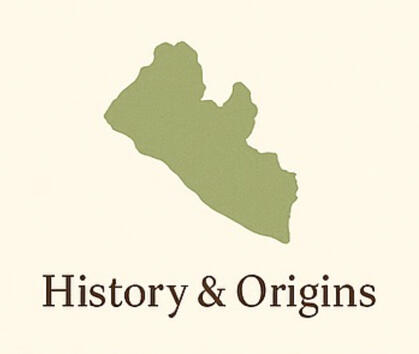
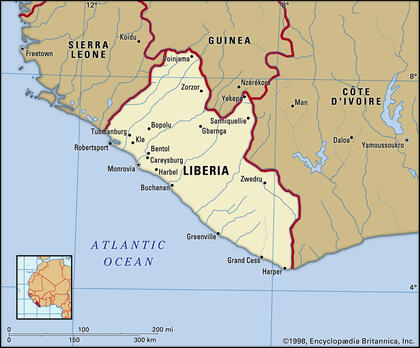
Geography & Location* Location: West Africa, bordered by Sierra Leone (NW), Guinea (N), Côte d'Ivoire (E), and the Atlantic Ocean (S).
* Capital: Monrovia
* Area: About 111,369 km² (43,000 sq mi)
* Climate: Tropical; hot and humid with distinct dry and rainy seasonsPopulation & Demographics* Population: Approximately 5.4 million (2024 estimate)
* Ethnic Groups: Over 20 indigenous groups, including Kpelle (20%), Bassa, Grebo, and Mano, as well as Americo-Liberians. Americo-Liberians are estimated to make up about 5% of the population
* Languages: English (official); lots of indigenous languages are also spoken
* Religions: Christianity (85.1%), Islam (12.2%), others)Key Statistics* GDP (Nominal): $4.35 billion (2023)
* GDP per Capita: $800 (2023)
* Human Development Index (HDI): 0.487 (2022), ranking 177th globally
* Main Exports: Iron ore, rubber, gold, timber
* Currency: Liberian Dollar (LRD); US Dollar also widely usedCulture & Society* Cultural Heritage: Mix of African-American Southern-style settler traditions and indigenous customs, like quilting.
* Music & Dance: Rich traditions including highlife, hipco, and traditional drumming
* Cuisine: Staples include rice, cassava (fufu and gaygba), plantains, eddoes, goat and bushmeat. Seafood is common along the coast.
* Sports: Football (soccer) is the most popular sport; George Weah, a former professional footballer, served as president.
Current Politics
Government
Modeled after the US
* System: Unitary presidential constitutional republic
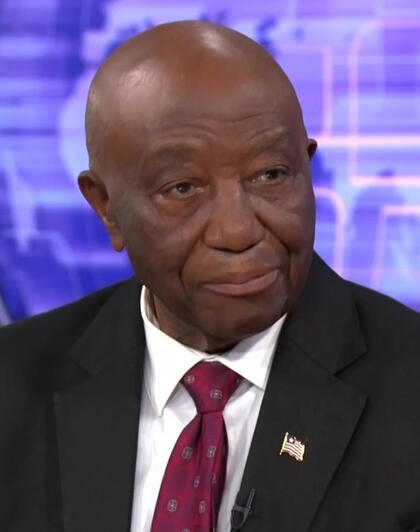
* Executive: President Joseph Boakai (since January 2024)
* Legislature: Bicameral National Legislature (Senate and House of Representatives)
* Judiciary: Supreme Court and subordinate courts
* Citizenship Requirement: jus sanguinis, which means it usually restricts its citizenship to "Negroes or persons of Negro descent."Current Administration
* Current President: Joseph Boakai, elected in 2023.Recent Initiatives:* Anti-Corruption: Suspension of over 450 officials for failing to declare assets
Pressing Issues in 2025
What’s Happening?
- Blue Carbon signed a deal with Liberia to manage around 10% of the country’s land (about 10,931 km²) for carbon offset projects.
- These projects would preserve forests and sell carbon credits to companies that want to offset their emissions rather than reduce them directly.Why Are Communities Angry?
- No consent was given: The Liberian constitution and land laws require prior, informed consent from Indigenous communities before using their land. This didn’t happen.
- Communities only found out after activist networks leaked the deal.
- 573 km² of forestland used by the Neezuin community, led by Matthew Walley, is at risk.What’s the Bigger Issue?
- This is part of a larger trend in Africa: Similar deals exist in Kenya, Tanzania, Zambia, and Zimbabwe.
- Some projects have led to forced evictions, human rights abuses, and loss of food security for rural populations.
- Rights groups and researchers describe this as "carbon colonialism" — when wealthy nations/companies exploit African land to greenwash their pollution without benefiting local people.Why Might This Not Help the Climate Much?
- "Additionality" is questionable: If forests would have been protected anyway, the carbon savings claimed are not real.
- Protecting one area and selling the credits might push deforestation elsewhere, making the net benefit zero.Political & Legal Developments
- The deal was pushed by former President George Weah and halted after protests, but it’s unclear if the new government will restart it.
- Liberia’s EPA now admits the deal was rushed and says they’re working on new regulations to ensure transparency and community protection.
- Blue Carbon continues to court developers for new projects, but details remain secretive.Why It Matters
- Liberia and other African nations are being courted for their forests in the name of fighting climate change.
- But local livelihoods, culture, and sovereignty are being put at risk without any meaningful consultation or benefit.who benefits from climate action and who pays the price?